
Engine System Tubing & Assemblies
Precision tubing and fabricated assemblies for everything around the engine. Intake, exhaust, cooling, charge air, and fluid routing. The parts that have to fit right, seal tight, and hold up.
One Engine, Dozens of Tubes. We Make Them All.
A leak means a field failure. A misaligned tube means an install problem that backs up production. Contamination inside a pre-engine part means a dead turbocharger. Engine system tubing doesn't leave room for close enough.
H-P builds the full engine-side package under one roof. Intake, exhaust, cooling, charge air, and fill. That means fewer vendors to manage, fewer part numbers to track, and components that actually fit together on the first install.
SAE J 1726 Cleanliness
Particle-controlled cleaning on every engine-side tube. Strict contamination control on pre-engine parts.
Compound Bending
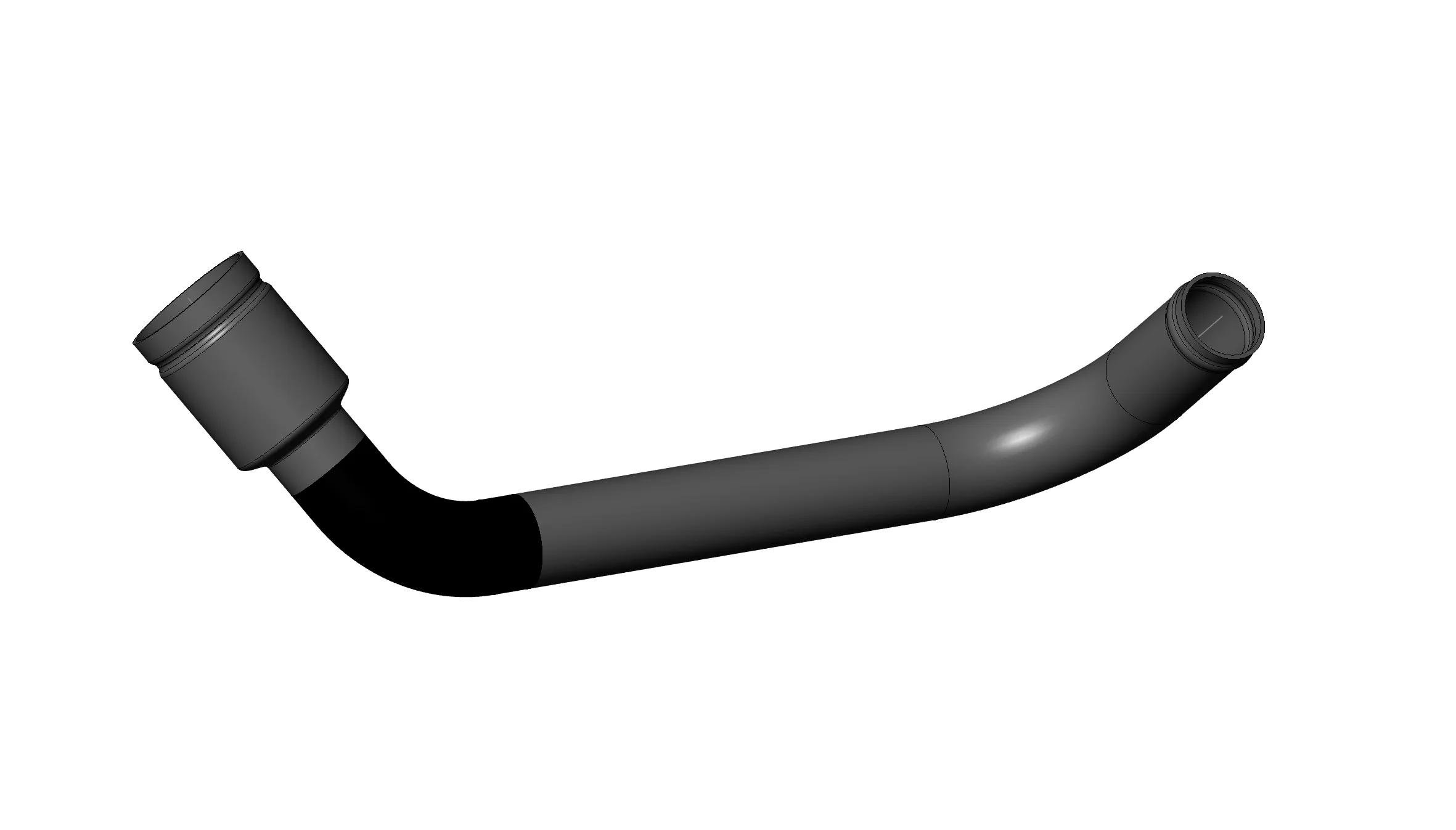
Multi-plane bends that route through tight engine bays while protecting internal surface quality.
End Form Variety
Marmon beads, flares, expansions, SME beads, threaded ends. The right connection for every point in the system.
Prototype Through Production
Sample parts for fit checks before committing to production volumes.
What We Build Around the Engine
Air Intake Tubing
Everything upstream of the engine has one job: deliver clean air. A particle that gets past the filter and into the turbo or combustion chamber doesn't come back out quietly. That's why intake tubing runs through our SAE J 1726 cleaning program before it ships, and why the bends have to be smooth inside even when the routing is tight outside. Typically aluminum for weight and corrosion resistance, with welded mounting brackets.
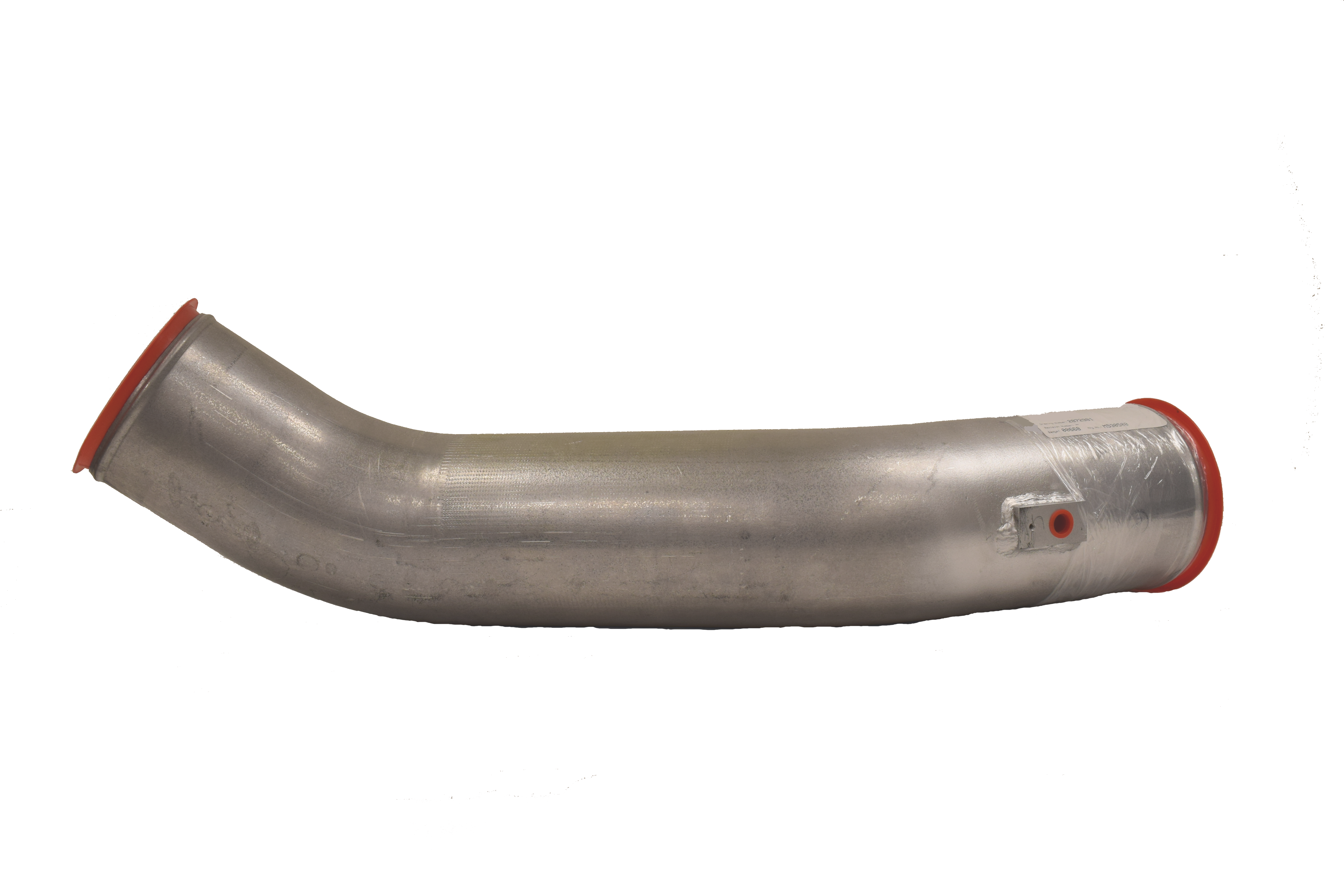
Exhaust Tubing & Assemblies
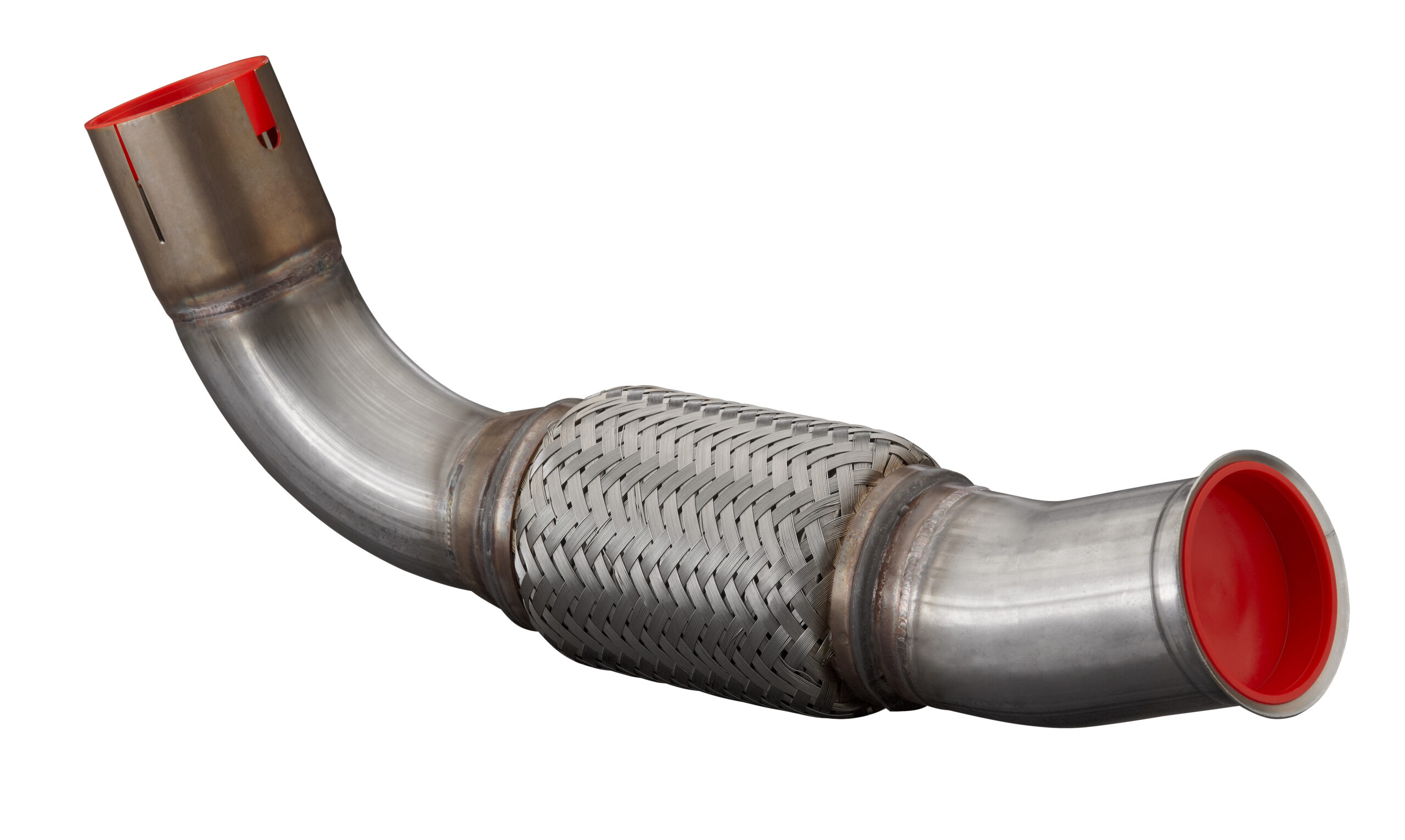
Post-engine tubing fights heat, thermal expansion, and constant vibration. A weld that cracks under cycling fails in the field. An end form that doesn't seal against the DPF or muffler connection creates an exhaust leak that shuts down a machine. We build for that. Marmon beads, expansion slots, and custom end forms designed for the actual connection points, not generic fits.
Aluminized carbon, stainless, and aluminized stainless handle the heat. Bellows go into assemblies where thermal movement and torsion need to go somewhere that isn't a crack.
Charge Air & Turbo Tubing
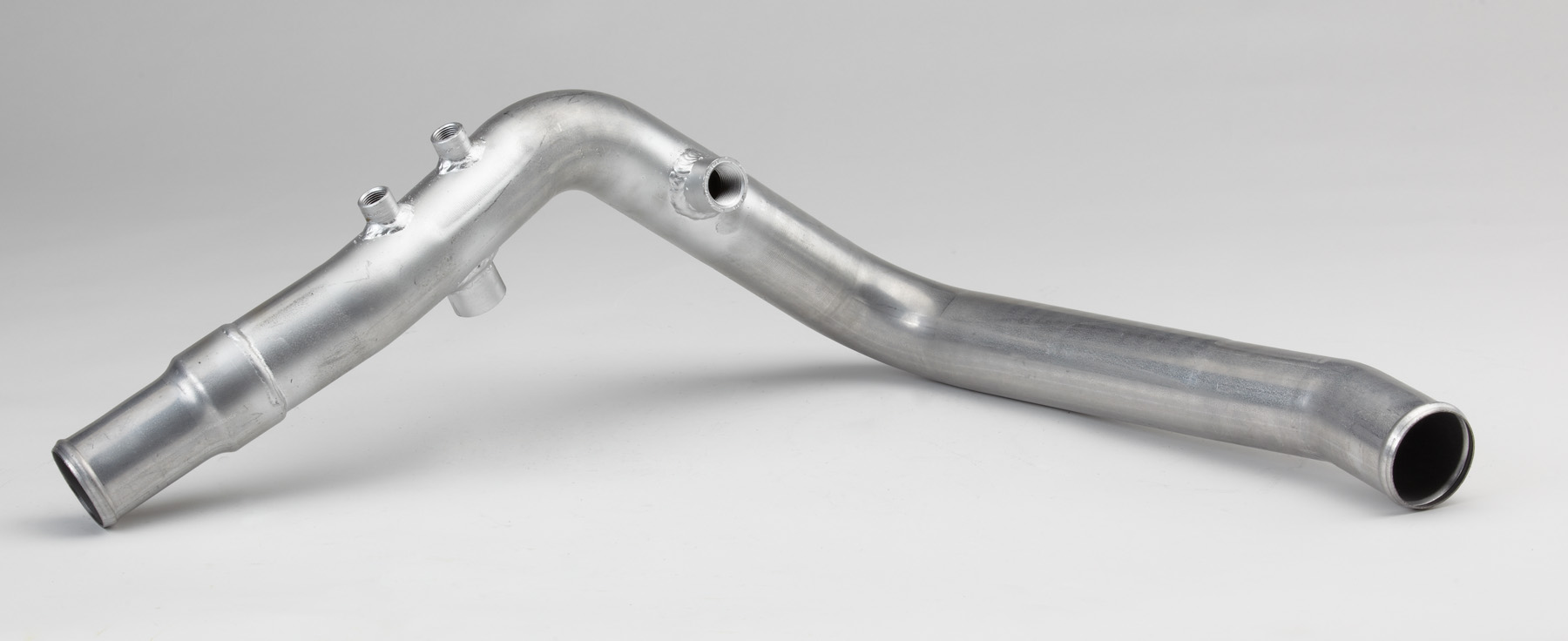
Pressurized air to and from the turbocharger. A boost leak kills performance. A contaminant kills the turbo. These parts run strict contamination control, and the sealing at every connection point has to hold under pressure that the engine is actively generating. Marmon beads and flared ends, typically on 1D bends.
The inner wall matters as much as the seal. One wrinkle disrupts the flow path, and the turbo feels it as lost efficiency.
Radiator & Coolant Lines
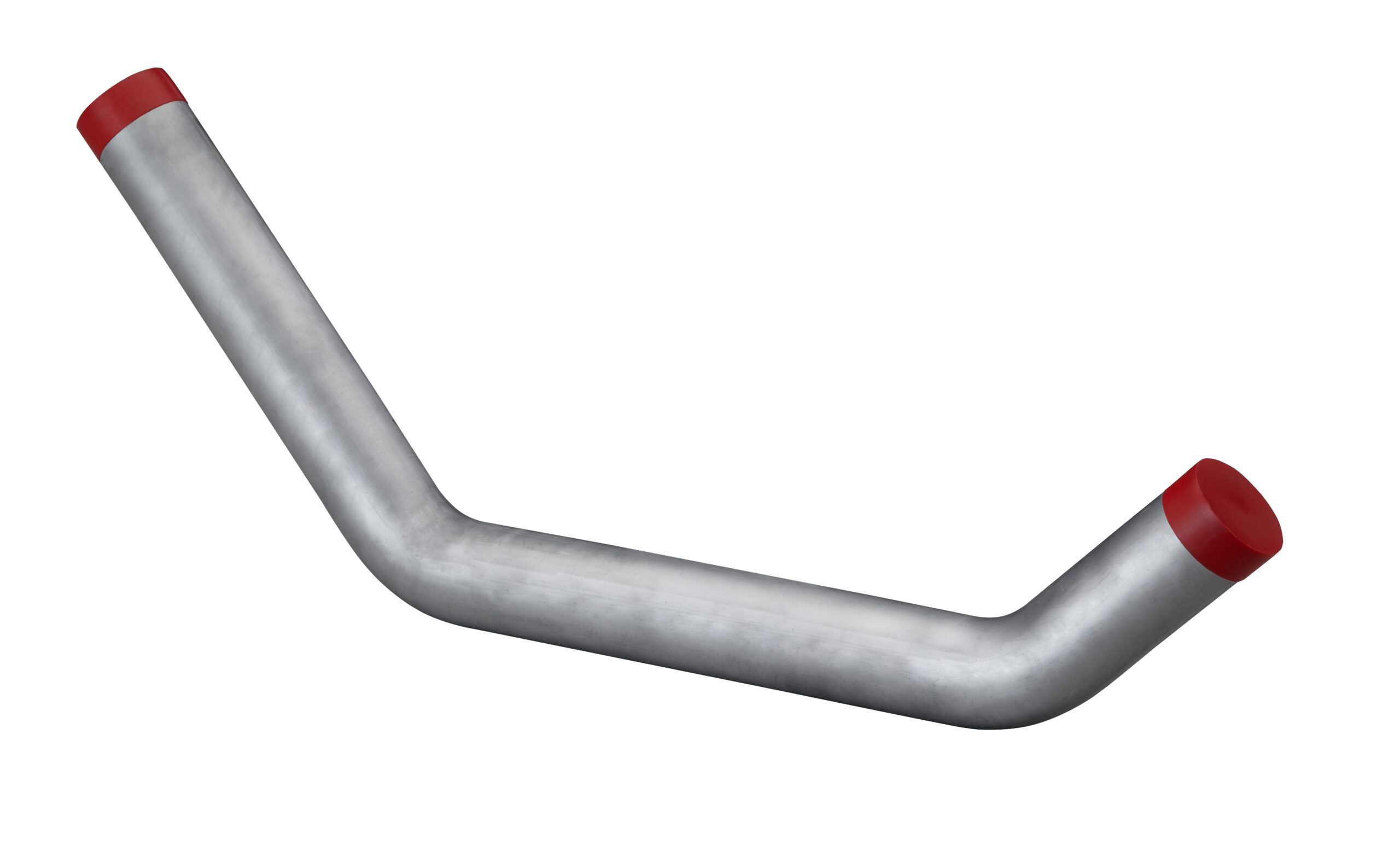
A coolant leak on a piece of heavy equipment isn't a minor repair. It's downtime. These tubes route through tight spaces in smaller diameters, carry fluid under pressure, and have to seal at every connection for the life of the machine. End forms are typically SME compliant beads.
Aluminized carbon steel coated on both sides is the standard. Coolant corrodes from the inside, weather corrodes from the outside. The dual coating handles both directions.
Fill Pipes
Fuel, oil, and fluid fill pipes. Simpler geometry than the rest of the engine-side package, but tight tolerances at the connection point. A threaded end that doesn't seal is a fluid leak on an engine. The end forming has to be precise enough to hold a screw-on cap tight through vibration and thermal cycling for years. Carbon steel or aluminum, smaller diameters.
Materials We Run
Material choice affects weight, corrosion resistance, and service life. If you are balancing cost against durability against operating environment, we will walk through it with you.
Carbon Steel
1006 – 1026
Stainless Steel
304, 316, 409, 439
Aluminum
6061, 6063, 5052
Aluminized Steel
1006 – 1010
Specialty Alloys
Ask our engineers
SAE J 1726 Cleanliness Standard. All engine-side tubing goes through our particle-controlled cleaning program. Pre-engine parts (intake, charge air, coolant) are cleaned to SAE J 1726 standards.
Where This Work Goes
From off-road equipment to power generation, these parts end up in machines that cannot afford downtime.