
Pneumatic Conveying Tubing & Components
Resin pellets, bulk powder, sealed carriers. Different materials, same truth: if the tube network isn't right, nothing downstream works.
The Tube Is the System
Pneumatic conveying moves material through enclosed tubing using air pressure or vacuum. What's inside the tube varies widely: abrasive mineral powders, fragile polymer pellets, sealed document carriers traveling at speed. The tube network doesn't just connect point A to point B. It is the system. Every bend radius, wall thickness, interior surface, and connection either keeps things moving or quietly works against you.
Bulk material systems and carrier pneumatic systems operate very differently, but both depend on the same thing: a clean, consistent internal path. H-P Products supplies tubing, bends, fittings, and couplings for the full range of pneumatic conveying applications, and has been the primary tube supplier for carrier pneumatic systems since the industry began.
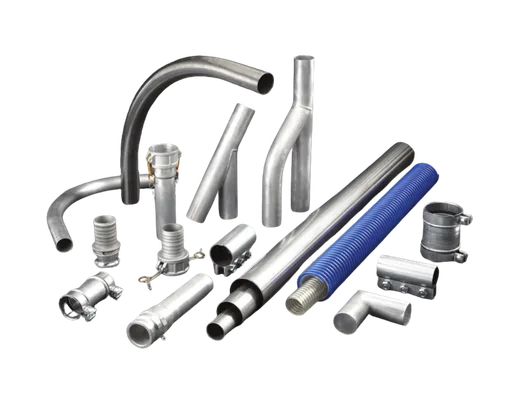 Pneumatic Conveying System Components
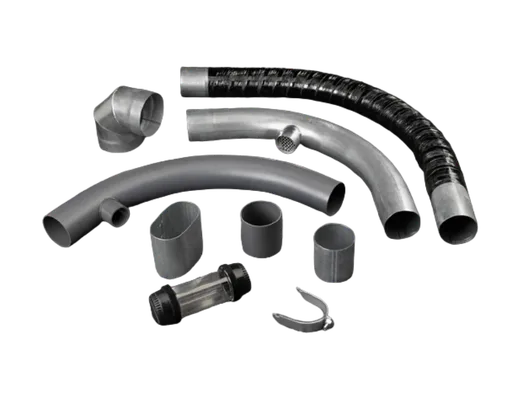 Carrier System Components
What Goes Into the System
Tubing & Pipe
The backbone of every conveying line. Standard tubing from 1.5" to 10" OD in 11, 12, 14, and 16 gauge. Pipe from 1" to 8" NPS in Schedule 5, 10, 40, and 80. Carbon steel, stainless steel, aluminum, and galvanized steel. Standard 20-foot lengths, cut to spec on request.
For carrier pneumatic systems, metal tubing from 2.25" to 6" OD, plus 4" x 7" OD oval tubing and PVC at 4.625" OD x 4.385" ID. Straight and expanded end configurations across the full range.
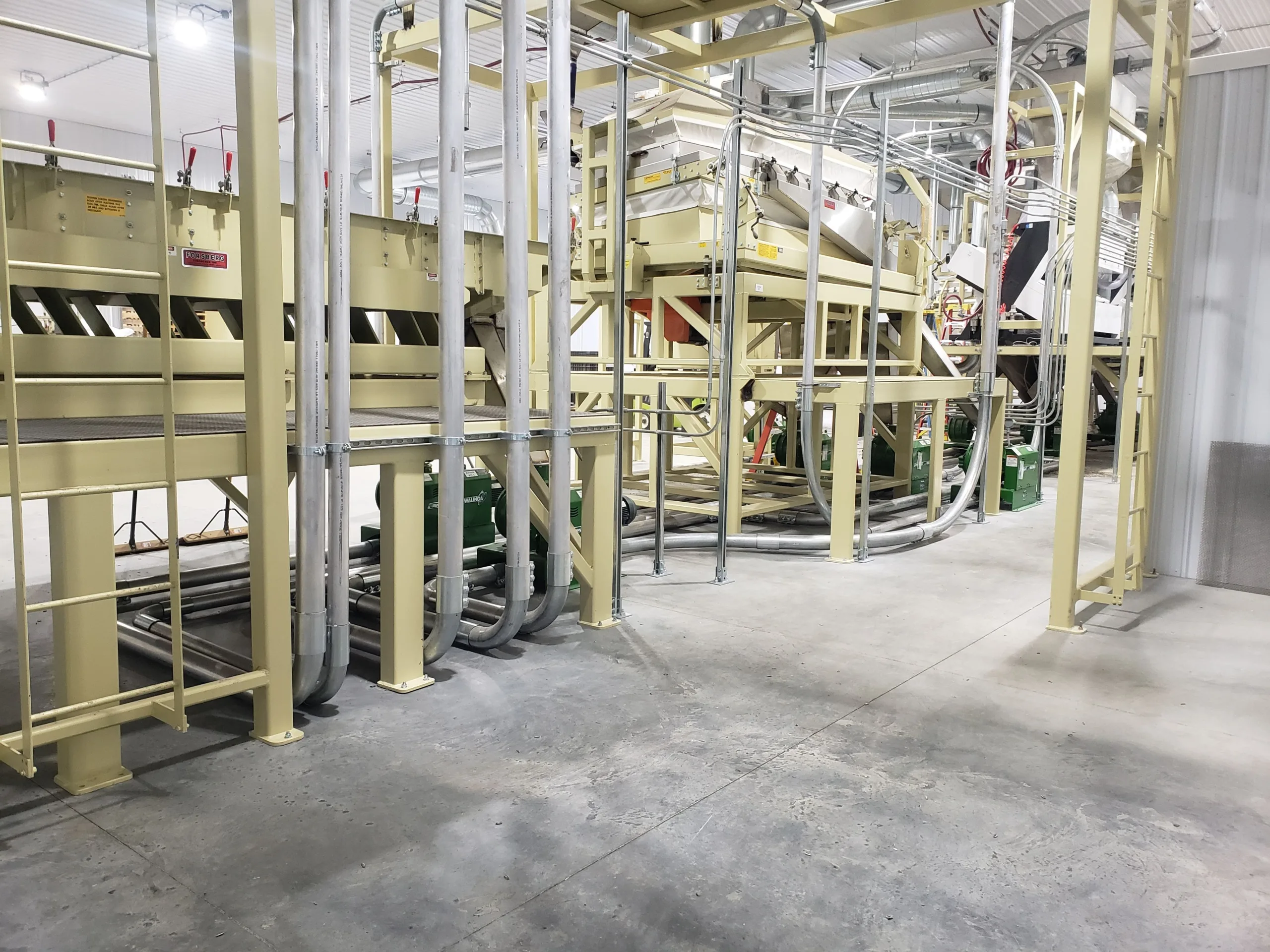
Bends & Elbows
Short radius, standard radius, and long radius bends with extended centerline radii available. Smooth, wrinkle-free mandrel bends in 30, 45, 60, and 90 degree configurations. Expanded or straight end options. Available in tube and pipe across all material families.
Bend radius depends on the application. Bulk conveying systems typically call for 6x diameter bends to protect material and minimize wear (3" on 18" CLR, 2.5" on 15" CLR). Carrier pneumatic systems run at least 4x diameter to give capsules a smooth path through buildings (4" on 48", 6" on 48", 8" on 32" are common).
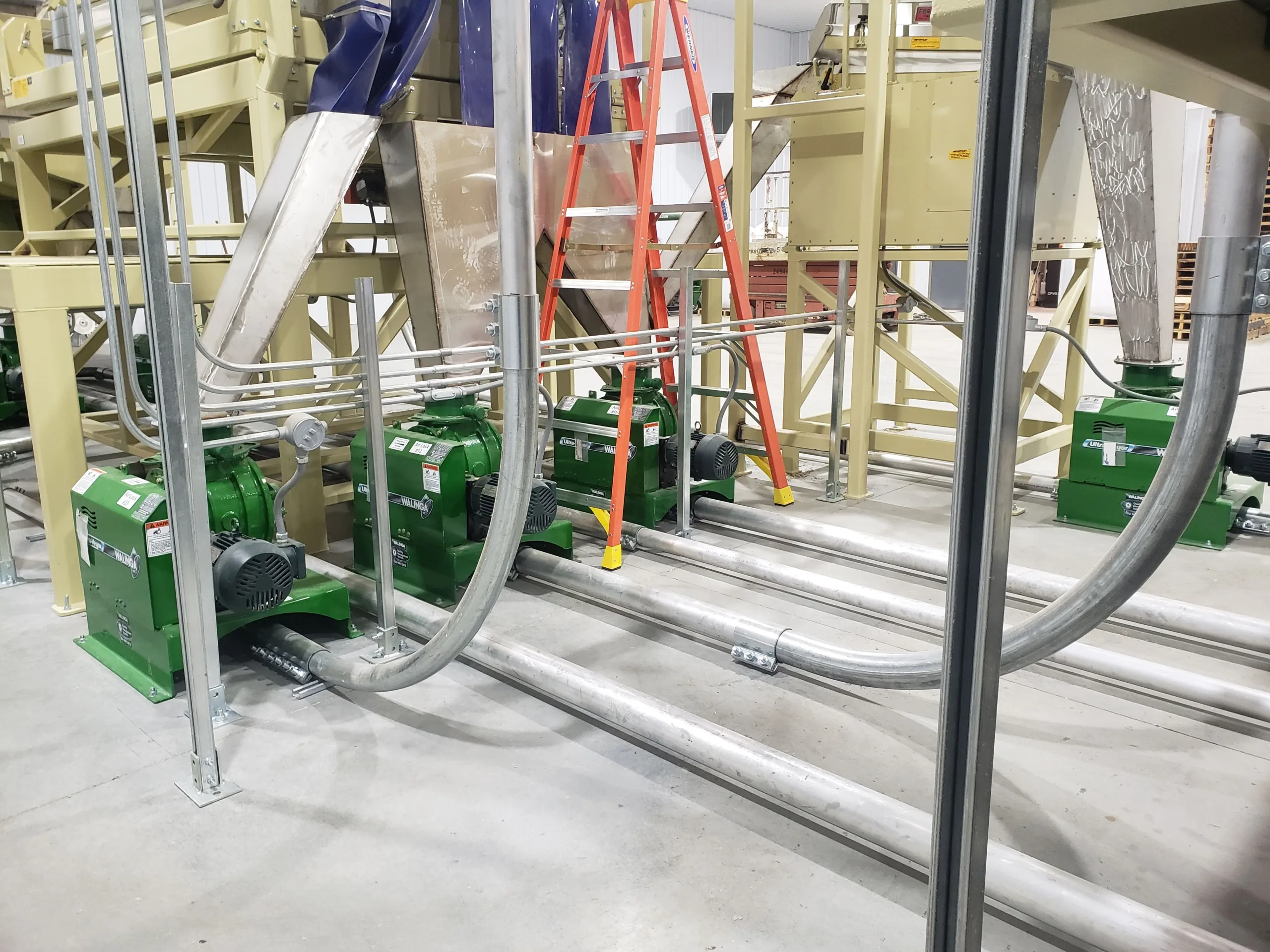
Fittings
Conveying lines don't run in straight paths. Every split, merge, and direction change needs a fitting that keeps airflow moving and material where it belongs.
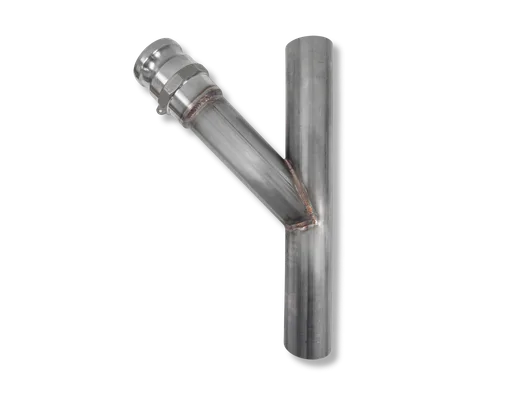
Standard catalog includes laterals (30 and 45 degree), wyes, parallel wyes, tees, mitered elbows, reducing couplings, female and male adapters, and plate flanges. For carrier pneumatic: segmented elbows, tees, wind gates, bypasses, twists, and caps. Available with expanded or straight ends to match your joining method.
Custom Configurations
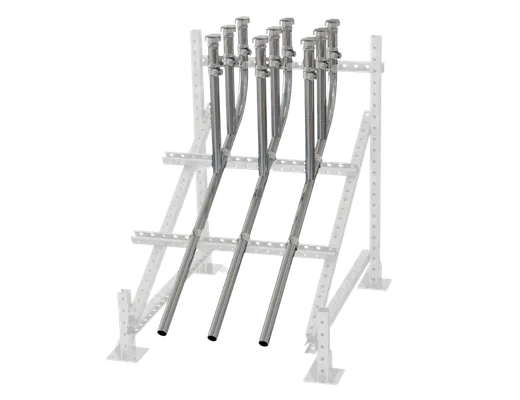
Not every installation maps to a catalog. Tight clearances need non-standard radii. Retrofits require transition pieces between tube and pipe sizes. Manifolds with multiple pickup points need to be fabricated as a single assembly. Offset bends, flanged stubs, and special end treatments all happen on the same floor as standard production.
Send the drawing, the sketch, or the problem. We will quote it.
Abrasion & Wear Resistant Treatments
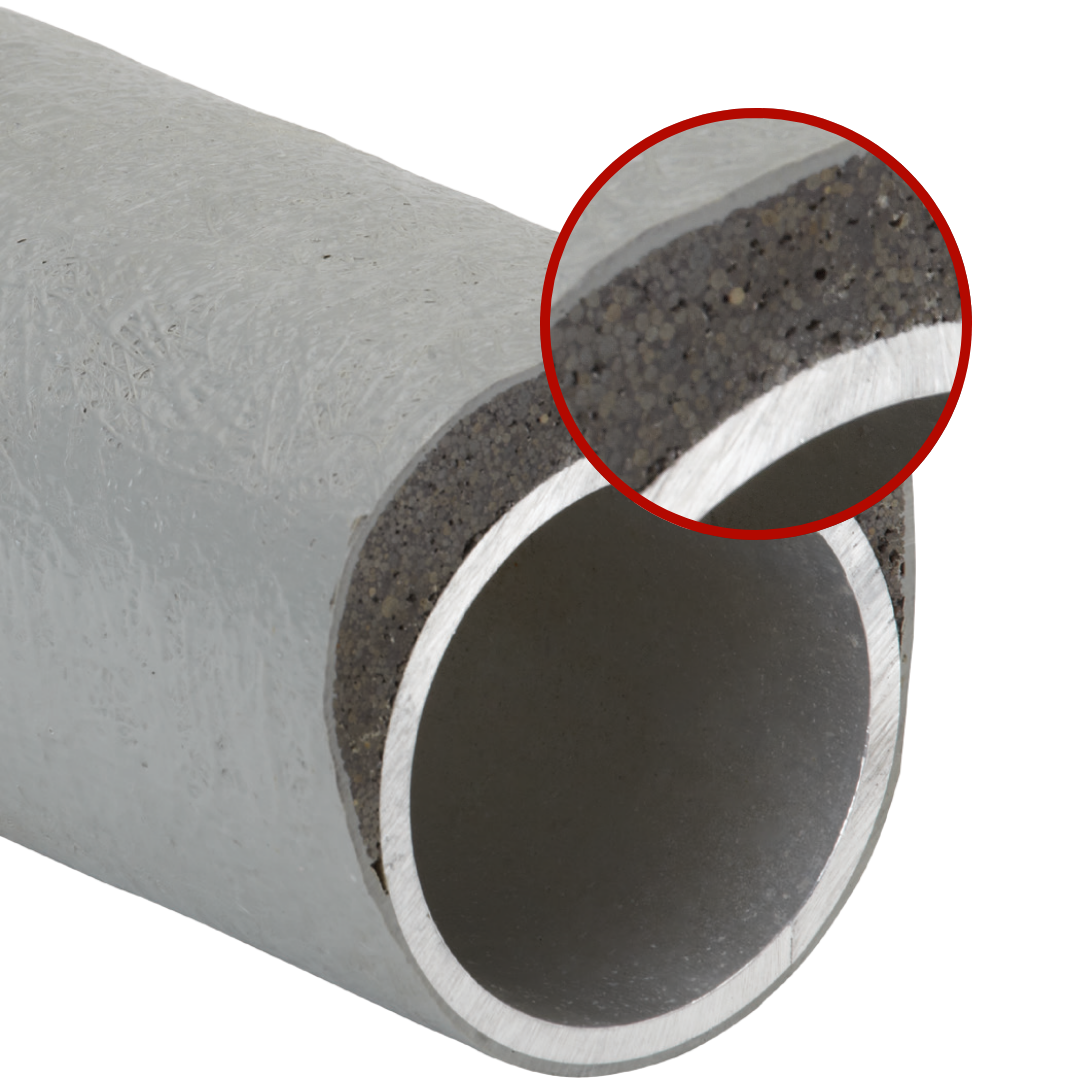
Standard tubing works for most applications. When it doesn't, interior treatments extend service life, reduce material degradation, and solve wear problems before they start.
Available Material Families
Material selection depends on the product being conveyed, the operating pressure, the environment, and how much wear the system will see.
Markets Served
H-P pneumatic conveying components are installed across a broad range of material handling and carrier transport applications.
Frequently Asked Questions
-
Tube is measured by outside diameter (OD) and specified by gauge wall thickness. Pipe is measured by nominal pipe size (NPS) and specified by schedule wall thickness. In pneumatic conveying, tube is more common for general material handling, while pipe is specified when higher pressure ratings or standardized flange connections are required. H-P supplies both, and fittings and couplings are available for either.
-
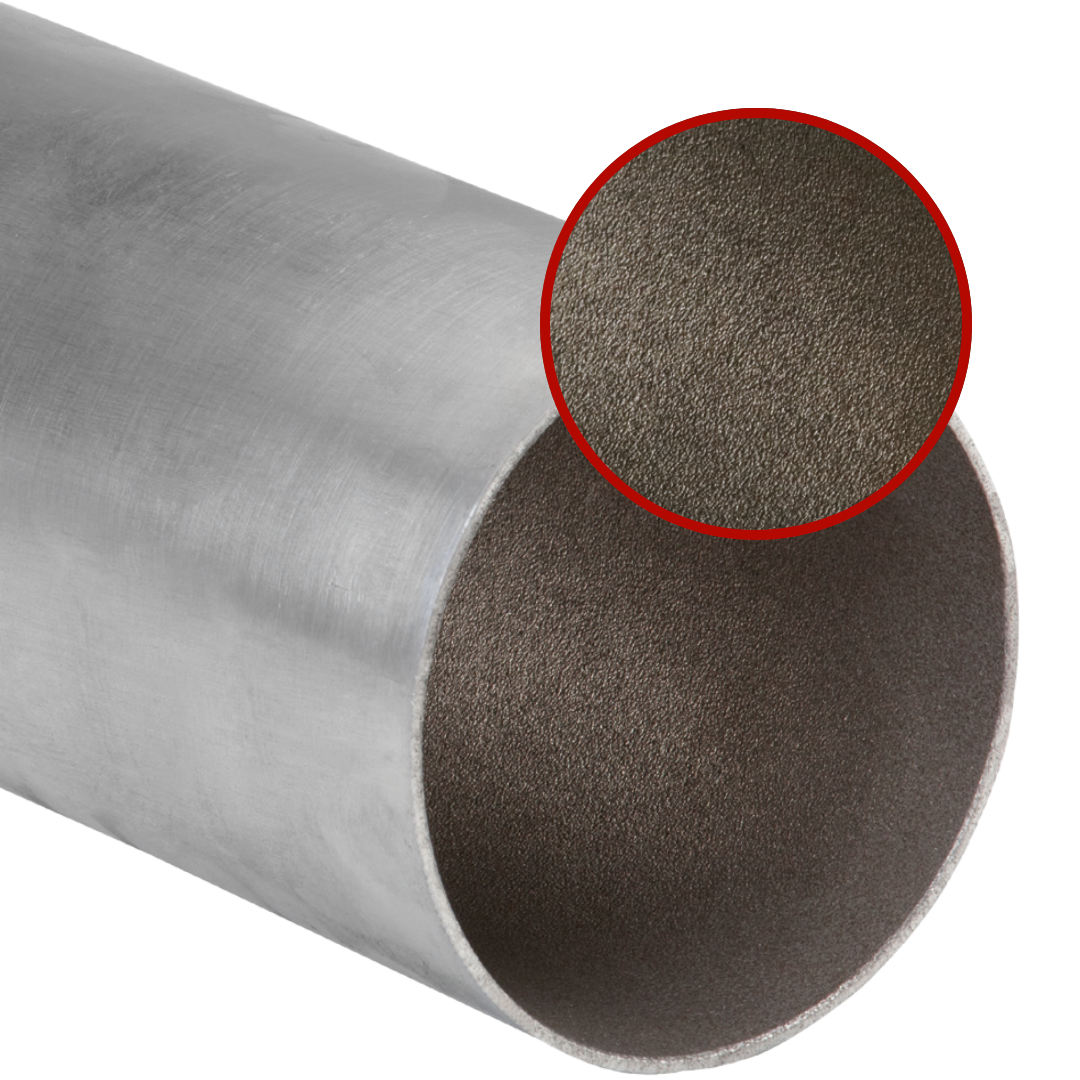
Angel hair forms when resin pellets contact internal tube surfaces at high velocity. Friction generates heat, causing pellets to smear against the tube wall. When those deposits break free, they become long filaments that clog material lines, hoppers, and processing equipment. Directional shot peening reduces this by creating a dimpled interior surface that minimizes sustained pellet-to-wall contact.
-
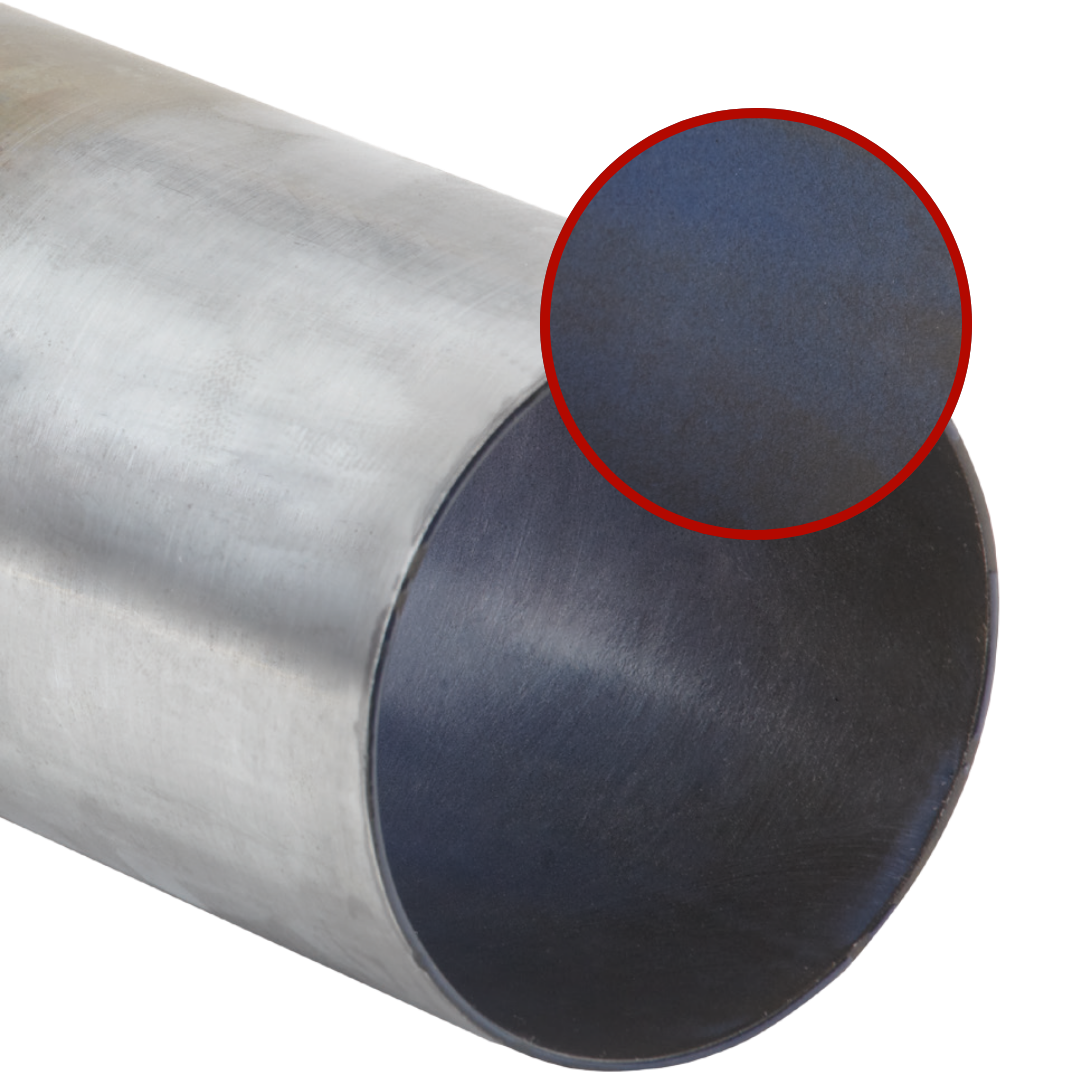
Three interior treatment options are available depending on the severity of the wear. Directional shot peening creates a hardened, dimpled surface that reduces fines and extends tube life in plastics conveying. Porcelain lining applies a glassy enamel rated 6 to 7 on the Mohs hardness scale, available in single coat (.004-.007") or double coat (.008-.012") for lengths up to 10 feet. Ceramic coating uses a matrix of high alumina ceramic beads with a fiberglass overwrap for the most extreme abrasion environments.
-
It depends on what you are conveying and the environment. Carbon steel is the default for most bulk systems. Stainless steel is required where contamination control or washdown matters (food, pharma, chemical). Aluminum reduces weight on long overhead runs. Galvanized steel adds corrosion resistance for exposed or outdoor installations. For carrier pneumatic, both metal and PVC tubing are available. If you are unsure, contact us with your application details and we can recommend the right material.
-
Some components cross over and some do not. Compression couplings, Eliminators, Super Grips, and Cam & Groove fittings are available in both tube OD and pipe NPS sizes. INSTALOK couplings cover both as well. Laterals, wyes, tees, and adapters are manufactured for tube and pipe separately because the wall thicknesses and ODs differ. When ordering, specify whether you are working with tube (by OD and gauge) or pipe (by NPS and schedule) so the right components ship.
-
The Pneumatic Conveying & Industrial Vacuum Components Catalog covers all standard bulk conveying tubing, bends, fittings, couplings, and accessories. A separate Carrier Pneumatic Catalog is available with specifications for metal and PVC carrier tube systems. Both are free PDF downloads.