Tube Welding for Demanding Fabrications

MIG, TIG, cobot, laser, and robotic laser welding. All in-house.

Overview

Serious Welds for Serious Applications

Six welding processes, one roof. MIG, TIG, cobot, laser, robotic laser, and brazing. We don't send your parts across town to get welded. If your drawing specs the method, we run it. If it doesn't, our team figures out the right approach based on the material, wall thickness, and what the joint actually needs to do.

Every procedure is AWS-certified. Every run has eyes on it from our in-house weld inspector. The result: leak-free, structurally sound assemblies with clean welds. Not because we got lucky, but because we built the process that way.
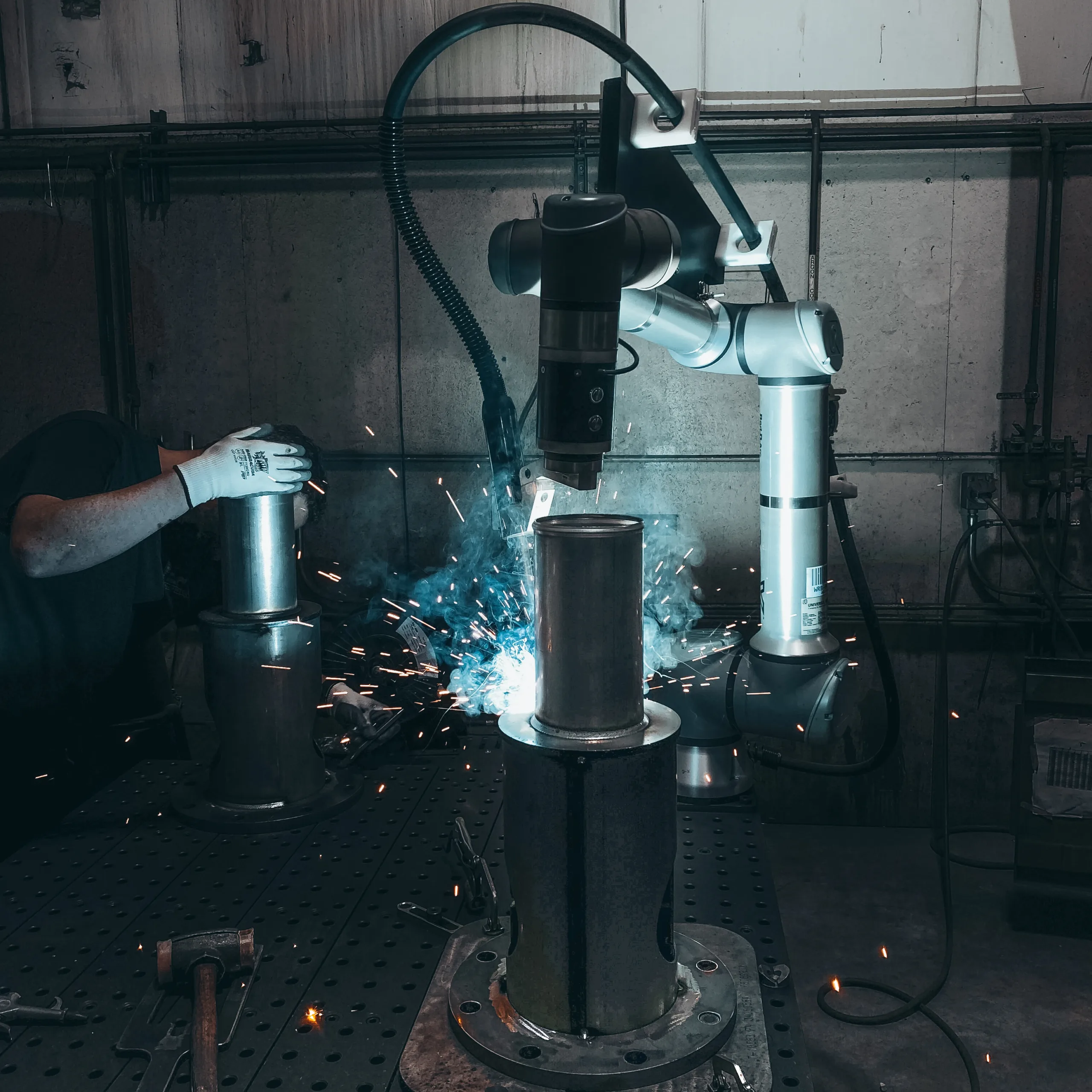
Cobot welding system at H-P Products
Our Processes

Six Ways We Weld Tube

MIG Welding
The workhorse. Continuous wire feed, shielding gas, strong welds across carbon steel, stainless, and thicker-wall materials. If you need it welded and you need it moving, this is probably where it starts.
TIG Welding
When the weld has to look as good as it performs. Full control over heat input. The go-to for thin-wall tubing, stainless, and aluminum where finish and precision matter.
Cobot Welding
Same weld, every time. Programmed paths with less part-to-part variation. For runs where consistency isn't optional.
Laser Welding
The newest tool in the shop. A concentrated beam that creates deep, narrow welds with minimal heat input. Less distortion and a smaller heat-affected zone than traditional methods.
Robotic Laser Welding
Laser welding on autopilot. The same low-heat laser beam, now on a programmed robot arm in its own dedicated cell, running the joint the same way every part. For when you want laser finish with the repeatability of automation.
Brazing
For the joints that need something different. Joins dissimilar metals and creates sealed connections without the heat distortion of fusion welding.
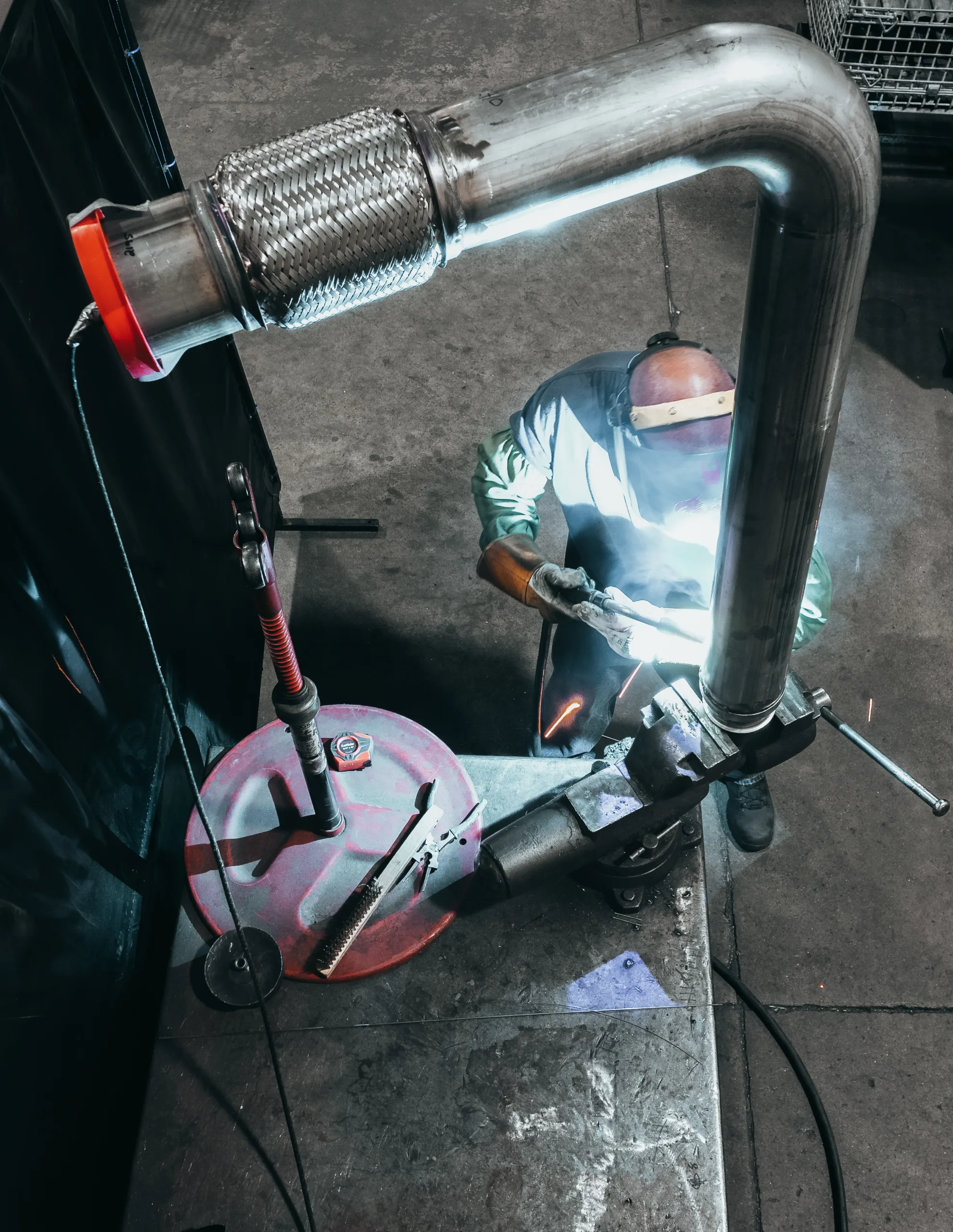
Welding and inspection at H-P Products
Quality & Testing

We Don't Ship Guesswork

AWS certification is the baseline. Every weld procedure here is qualified to that standard. But a certificate on the wall doesn't mean much if nobody's checking the work. Our certified weld inspector reviews every run against the qualified procedure, throughout the process.

We run tensile strength tests on-site. Spatter control is built into every procedure, and anything residual gets removed before the part leaves the cell.

AWS Certified Procedures In-House Weld Inspector Tensile Testing
Common Questions

Tube Welding FAQs

MIG, TIG, cobot, laser, robotic laser, and brazing. All in-house. If your drawing calls out a specific weld method, we run it. If you need a recommendation, our team can help based on the material and joint.
Yes. All weld procedures are certified to AWS standards. We have a certified weld inspector on staff, and our facility operates under an ISO 9001 quality management system.
Carbon steel (1006–1026), stainless steel (304, 316, 409, 439), aluminum (6061, 6063, 5052), and aluminized steel (1006–1010).
Every weld starts with a qualified procedure. Our certified weld inspector verifies it's being followed. We run tensile testing on-site. Spatter control is designed into every procedure.
Cobot welding is a good fit when consistency and repeatability matter across a run. For lower-volume, complex, or prototype work, our welders run it manually. If you have a preference, we'll work with it.
Robotic laser welding is laser welding where the torch is carried by a programmed robot arm instead of a welder's hand. Our dedicated cell runs a fiber laser on a programmed robot arm, so the beam follows the same path on every part. You get the low heat input and minimal distortion of laser welding plus the repeatability of automation. We use it for thin-wall tube assemblies and cosmetic welds where consistency and finish both matter.
It depends on the joint. TIG gives a skilled welder full manual control over heat input and works on nearly any joint geometry. Laser welding puts far less total heat into the part, which means less distortion and a smaller heat-affected zone, and it runs faster on repeatable joints. For thin-wall stainless or aluminum where warping is the main concern, laser is often the better choice. For one-off or hard-to-reach joints, TIG usually wins. If your drawing specs one, we run it. If not, we will recommend based on the part.
Yes. Most of what leaves our weld cell is a finished assembly, not a bare bend. Flanges, brackets, ports, fittings, and mating tube sections, welded to the print. Send the drawing and we'll quote the whole part.
That's most of what we do. The majority of our welded assemblies start with tube we've already bent and laser cut in-house. Everything under one roof means fit-up is dialed in before it hits the weld cell. Our tube laser can produce saddle joints, cope cuts, and tab-and-slot features that reduce fixturing and speed up assembly.

Let's Talk About Your Part.

Send us a drawing. We'll figure out the best way to weld it and get back to you.